
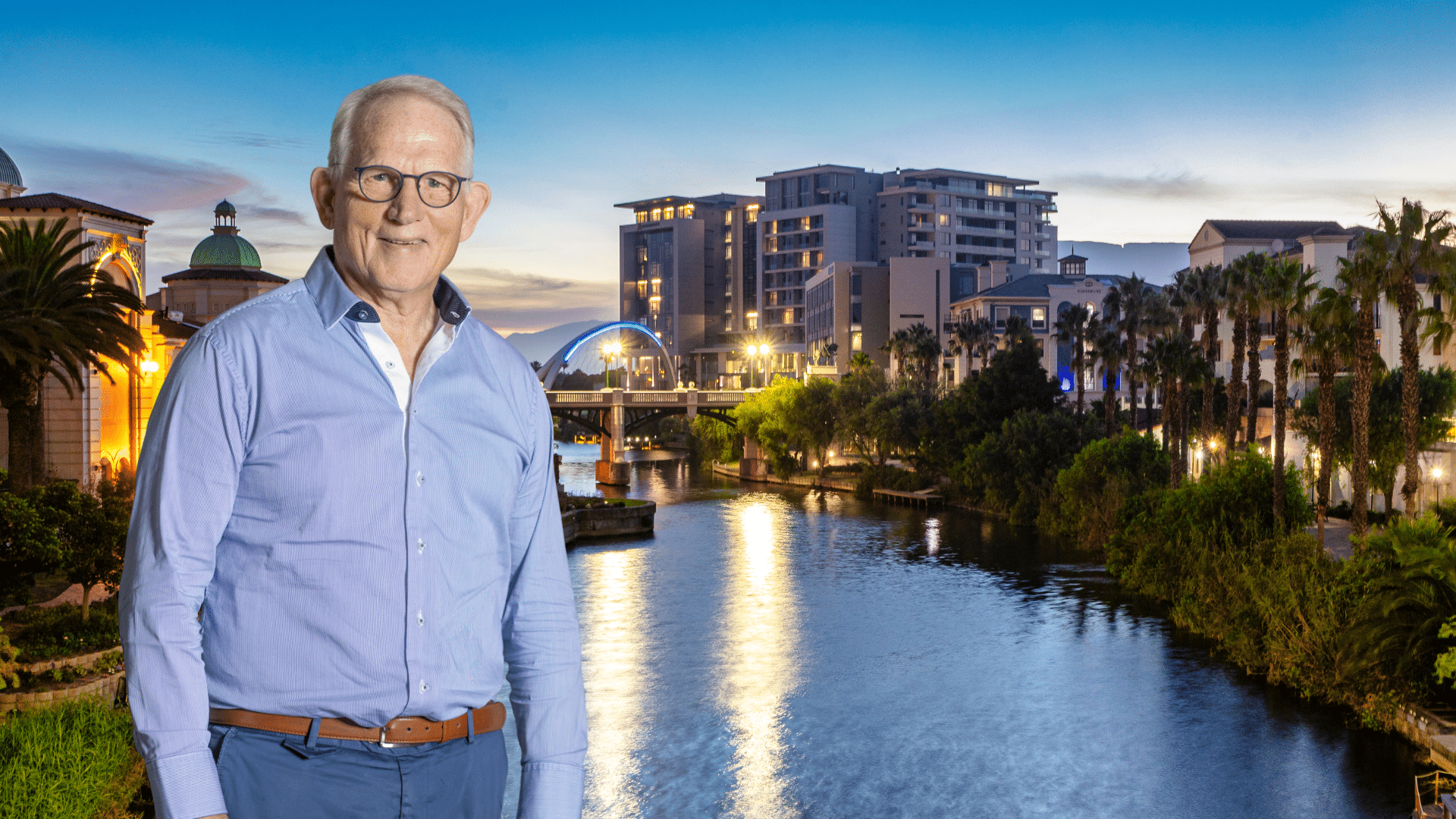
Leon Cohen, co-founder of the Rabie Property Group, was named Die Burger, the AHi, Cape Town’s Chamber of Commerce (“Kaapstad Sakekamer”) and Netwerk24’s Businessperson of the Year (“Sakeleier van die Jaar”) announced in Die Burger’s 4 September 2026 edition. He received the award at a black tie event on Thursday evening, 3 September, at the Mount Nelson.
It’s a fitting place to mark the moment, but the story Cohen told Die Burger editor Willem Jordaan starts a long way from a five star hotel. It starts with two schoolboys who didn’t know each other yet, a small paint and renovations business, and about R100 a month between them.
Leon Cohen, co-founder of the Rabie Property Group, is a name synonymous with urban transformation in South Africa. From a humble start as a “bakkie builder” to the creation of iconic projects like Century City, Cohen and his team have built a legacy of innovation, integrity and community building. Over almost 50 years they have helped shape large parts of Cape Town, its suburbs and its communities.
Cohen’s entrepreneurial journey with Johnny Rabie began in the 1970s with a small paint and renovations business. Cohen went to school at Paarl Boys’ High and Rabie at SACS; the two boys had unknowingly played rugby against each other. They later studied together at Cape Technikon, where they became friends.
“We had no money, maybe R100 a month between us, and we decided: let’s start our own business,” Cohen recalls. There was some paintwork, some renovations, a bit of building work: “essentially we were bakkie builders.”
“It would be wishful thinking to say we had this big vision. It didn’t exist. We just did what we needed to do to make a living. What we did understand was the importance of doing things right and being available to your clients.”
That construction work laid an important foundation for eventual property development in two ways, Cohen says: it taught him how important it is to get every component right from the start, from cost calculations to the build itself, and that when something goes wrong, you fix it, even if it costs you money. “I promise you, in the long run it pays off.”
This pursuit of quality on a practical level eventually became the Rabie philosophy of “leaving a legacy wherever you go.”
Cohen also credits an early lesson in how you treat people. A rugby coach humiliated him in front of the school hall with the words “what are we going to do with this damned Englishman?” He decided then that he would never treat people that way. “It’s entirely possible to get the best out of people without humiliating them.” By matric he, the “damned Englishman,” was captain of both the first rugby and cricket teams.
From individual houses to whole neighbourhoods
At a time when most people built their own homes, Rabie made the shift to large-scale development, moving from single-erf houses to full neighbourhoods. That early insight laid the groundwork for a company that now plays a defining role in Cape Town’s urban landscape. Rabie’s portfolio spans residential, commercial, retail, mixed-use and hospitality development.
Century City: the turning point
A defining moment came in 2004, when Rabie invested in an ambitious project to turn a marshy, derelict site into a smart mini-city that would attract local and international investors, companies, residents and visitors.
Century City today covers over a million square metres of mixed-use space, with 8.5km of canals and Intaka Island, a 16-hectare wetland nature reserve, making it one of South Africa’s leading smart-city developments.
How it happened
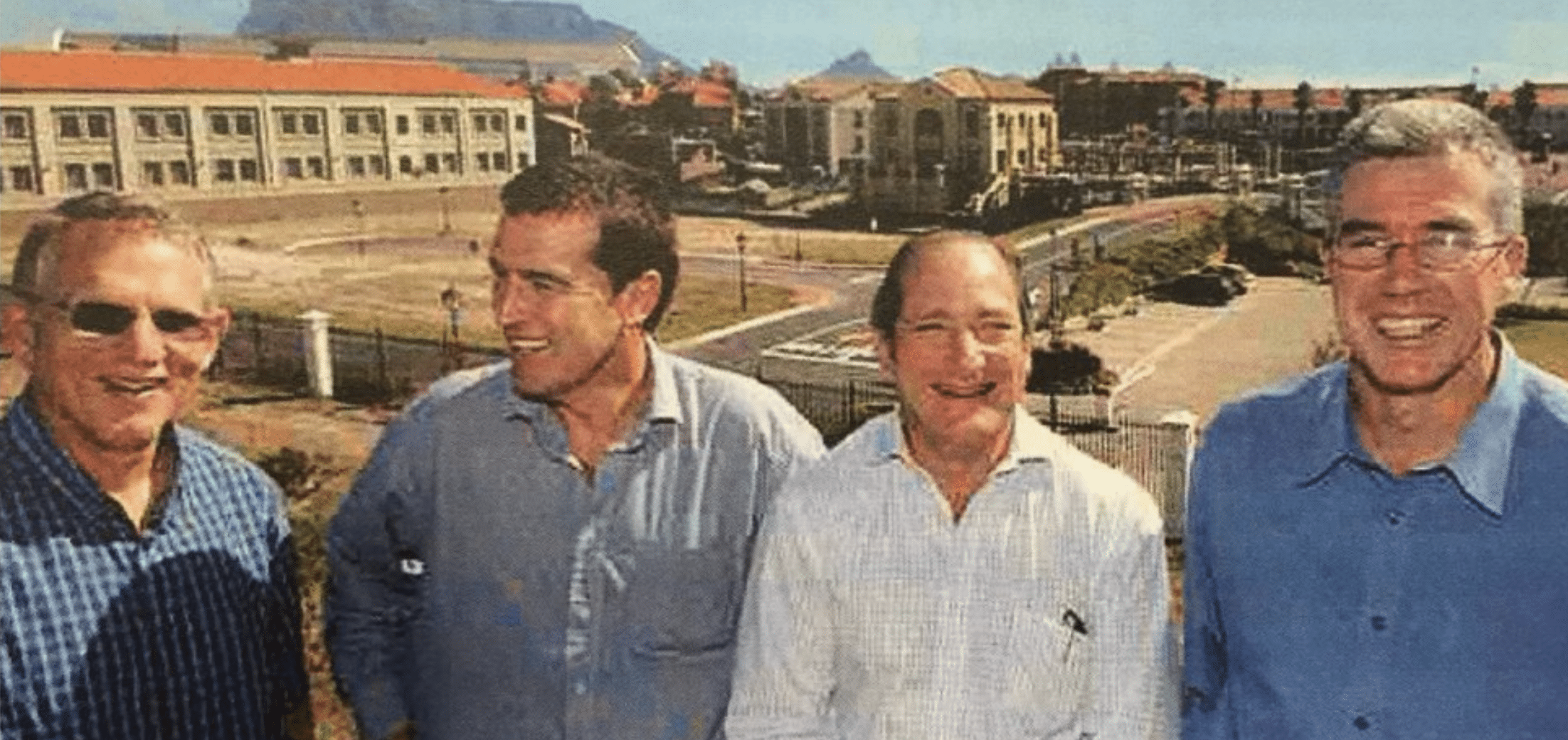
Monex Development launched Century City in 1997, built around two big anchors: Canal Walk (South Africa’s 5th largest shopping centres) and Ratanga Junction, the large seasonal theme park.
High early infrastructure costs, combined with a volatile economy, meant Monex struggled to make the remaining undeveloped land profitable. By 2004 Century City’s future hung in the balance: only 255,000m² of the permitted development potential had been built.
The turning point came when Rabie Property Group stepped in and bought the remaining undeveloped land, rewriting the plan entirely around the principles of “new urbanism”: self-sustaining communities where people can live, work, relax and shop without depending on a car.
Rabie unlocked Century City’s real potential through four deliberate strategies:
- Corporate decentralisation — persuading major companies to leave an overcrowded Cape Town CBD, building premium office space like the Bridgeways Precinct with green building standards and high-speed fibre.
- Secure living — access-controlled residential complexes built right alongside the 8.5km canal system, appealing to young professionals, families and retirees with growing safety concerns.
- A lifestyle and conference hub — identifying a gap in the business tourism market and developing the Century City Conference Centre and Hotel, creating a lively central public square with restaurants and cafes.
- The transformation of Ratanga Junction — closing the financially unsustainable theme park in 2018 and turning the land into Ratanga Park, a six-hectare public green space and water feature that became the new focal point for luxury residential developments like Park Place, On Park and The Bridges.
Under Cohen’s leadership, Rabie also developed Westlake, Burgundy Estate, Clara Anna Fontein, Atlantic Beach, Big Bay and Royal Ascot, projects that together shaped greater Cape Town’s urban fabric.
Westlake: people before profit
For Cohen and Rabie, upliftment of communities is central to reshaping a city’s geography. Westlake, at the southern end of the Constantia valley, is one of South Africa’s most successful public-private partnerships. In the late 1990s it was largely unused state land, home to around 3,000 informal residents living in poor conditions alongside the M3.
Rabie acquired the land with a plan to unlock its commercial potential while uplifting the local community. As a core condition of the deal, Rabie took responsibility for formally rehousing the informal residents, building 650 brick, tiled-roof houses (with running water, electricity and sewerage) that today make up Westlake Village. Alongside this, Rabie developed the rest of the land into a sought-after, low-density business and office park, plus modular residential units and a private school. The commercial success of the business zone helped fund infrastructure for the wider community.
This work earned recognition: SAPOA’s Green Spiral award in 2006, and FIABCI’s René Frank Habitat award in 2004, an international honour recognising excellence in sustainable human settlements and social housing.
Sinenjongo High School
Rabie’s involvement with Sinenjongo began in 2008, when Cohen and his team helped replace the school’s asbestos classrooms with brick ones. Rabie has since invested more than R20 million in the school, including helping the governing body appoint additional teachers. The results: in 2008 the school had just 45 matriculants and a 27% pass rate; roughly 18 years on, it has around 300 matriculants with a 90% average pass rate. Cohen has personally mentored many Sinenjongo alumni from school level through to qualifying as doctors, accountants, pharmacists and more.
Oasis Life and evolving retirement living
In 2018 Cohen and his team launched Oasis Life, a life-right retirement model, with the first development at the Clara Anna Fontein lifestyle estate in Durbanville, followed by Burgundy Estate, Constantia and Sunningdale. Cohen’s approach shifted the focus from traditional, clinical “old age homes” toward estates that support active ageing, recreation and community interaction, because people are living longer and expectations around retirement have changed fundamentally.
Community initiatives
During the Covid-19 pandemic, the Rabie Group partnered with the Century City Conference Centre on the Century City Feed-A-Family initiative, distributing 6,000 food parcels (each feeding a family of four for three to four weeks) to the neighbouring Joe Slovo community. The group also maintains a long-running bursary fund helping Sinenjongo pupils access tertiary education.
Legacy and leadership
Beyond humility and a people-centred approach, Cohen believes strongly in mentorship and passing on knowledge. When he stepped down as CEO in August 2024, Mariska Auret succeeded him, and he took on the role of Executive Chairman, handing the reins to a new generation of leaders while staying focused on mentorship.
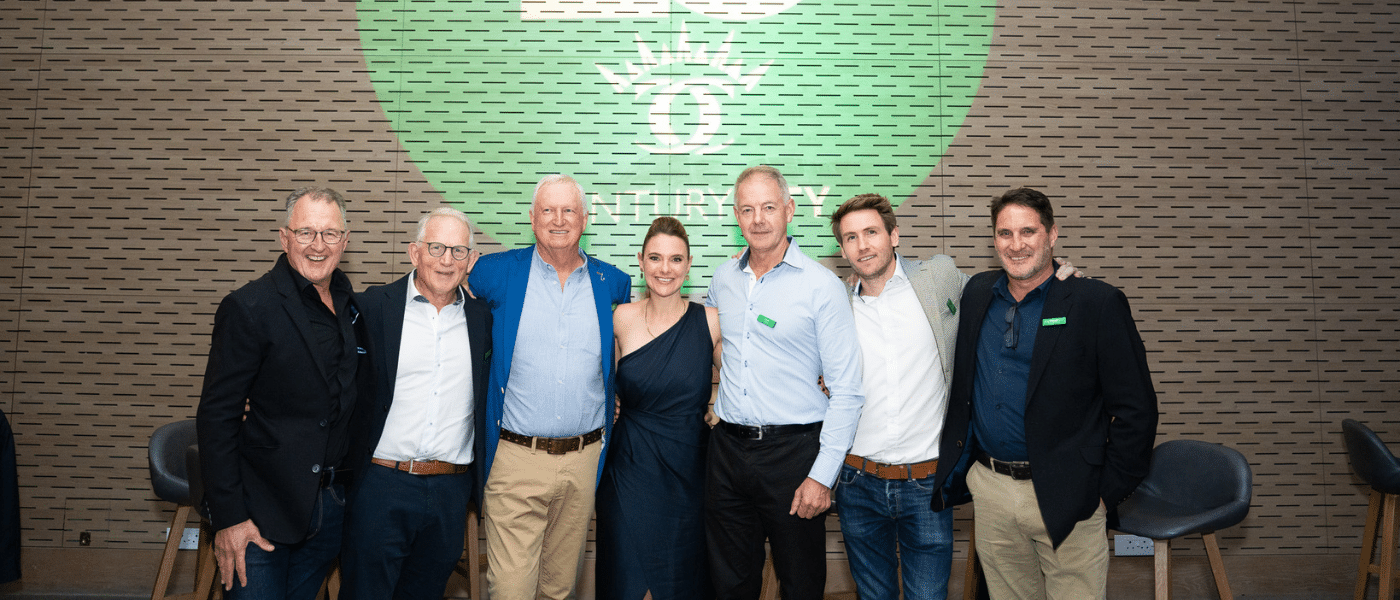
“Too few people invest in direct mentorship, because they’re scared of training someone who’ll take their job. But if you can train someone to do your job better than you, that’s proof you’re good enough, and destined for bigger things.”
For Cohen, money isn’t the end goal but a measure of how useful or relevant your business is, and a tool to give back. “My legacy isn’t just the buildings I leave behind, but the people and communities I helped grow.”
(Article written by Willem Jordaan from Die Burger, translated. Read the original article here: https://www.netwerk24.com/sake/ekonomie/nooit-is-mense-uit-die-oog-verloor-20260903-1241)